
Structure and Phases of the Placement Feasibility Interview
3.1 Stage 1 – Preparation and environment setting
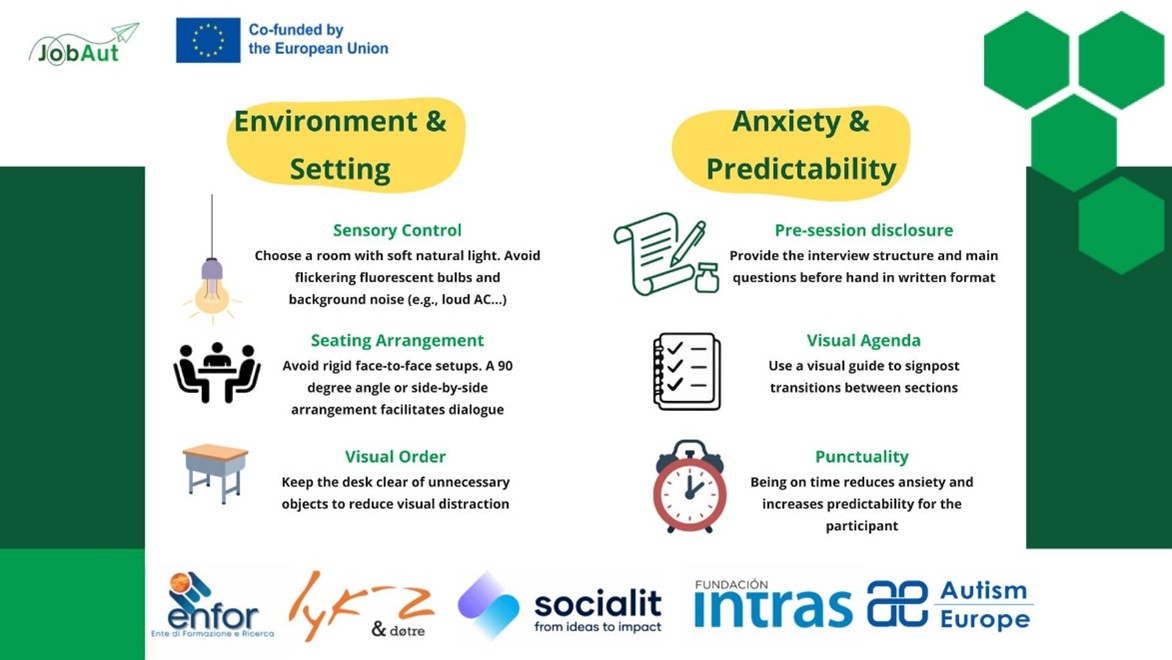
The preparation phase is essential for ensuring that the interview is conducted in conditions that support clarity, predictability, and comfort.
The job coach organises the physical and relational environment, taking into account sensory factors, time structure, and communication clarity. By defining the sequence of activities and setting clear expectations, the coach reduces uncertainty and facilitates engagement.
Even minor adjustments, such as allowing breaks or providing a clear agenda, can significantly influence the coachee’s ability to participate effectively.
3.2 Stage 2 – Core interview: dialogue and effective communication
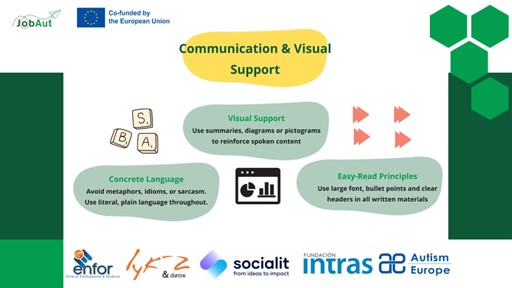
The core interview is the central moment of the Placement Feasibility phase. It consists of a structured dialogue through which the job coach explores the coachee’s experiences, preferences, communication styles, and perceived challenges.
This dialogue is not unidirectional. It is a co-constructive process in which meaning is developed collaboratively, allowing the coachee to actively reflect on their own functioning.
The job coach must balance structure and flexibility, ensuring that all relevant domains are explored while remaining responsive to the coachee’s communication style and pace.
3.3 Stage 3 – Closure and feedback
The closure phase is designed to consolidate the outcomes of the interview and prepare the transition to the next stage.
The job coach summarises the key findings using accessible language, invites the coachee to confirm or correct the interpretation, and agrees on the next steps. This process ensures shared understanding and reinforces the coachee’s sense of ownership.
The session concludes by highlighting strengths and potential, ensuring that the coachee leaves with a sense of direction and empowerment.

