
The tools
The tools are the practical instruments through which the JobAut methodology becomes concrete. They support the four dimensions of the coaching pathway: Vision, Identity, Communication and Impact.
In the R2, the tools are not presented as isolated exercises, but as connected activities that are demonstrated, carried out and debriefed. Their purpose is to help participants explore themselves, interact with others, recognise patterns, communicate more effectively and gradually build a personal action plan. The tools also preserve the “golden thread” of the methodology, because the insights developed through them should remain connected to the participant’s earlier interview, ICF profile and job-matching outcomes.
3.1 Creating alliance
Creating alliance is the first tool of the Vision module. It invites participants to co-design the atmosphere and learning environment of the training. Instead of entering a pre-defined setting passively, participants are asked what they need in order to feel safe and how they will contribute to creating a positive learning environment.
This tool supports ownership from the beginning. All voices are heard, and participants practise expressing needs, setting boundaries and naming expectations. The alliance is written down and kept visible throughout the training, so it becomes a shared reference point. It is also dynamic: it can be revisited and adjusted, showing that needs may change during the process.
3.2 Dreams
The Dreams exercise invites participants to explore what they want, wish for or dream about without immediately limiting themselves through physical, psychological, economic or geographical barriers. The point is not simply to produce a list of dreams, but to activate inner motivation, values and direction.
By naming dreams out loud, participants begin to make visible what matters to them. Sharing dreams also strengthens cohesion in the group and creates a sense of commitment. In the JobAut process, dreams can later be connected to realistic job alternatives and to the participant’s ICF/ESCO-based job matches, so that aspiration and feasibility remain linked.
3.3 Cognitive Triad
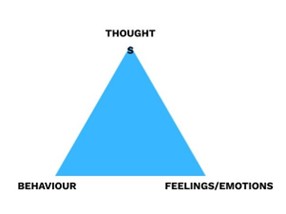
The Cognitive Triad introduces participants to the connection between situations, thoughts, feelings and behaviour. The exercise helps them see how a particular situation can generate a thought, how that thought can create an emotion, and how the emotion can influence action.
The purpose is to increase awareness and create more freedom of choice. Participants learn that a thought is only a thought: it can be noticed, questioned and possibly replaced by a more useful one. This is important because small adjustments in thought patterns can lead to meaningful changes in behaviour and can support participants in moving toward their goals with greater confidence.
The tool is particularly relevant for employment because it helps participants recognise patterns that may affect motivation, action, communication and resilience in work-related situations.
3.4 Inspiring leaders
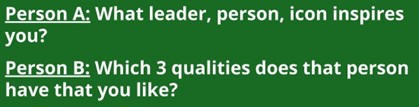
Inspiring Leaders is part of the Identity module. Participants identify people or figures who inspire them and then name the qualities they admire in those people. Through this process, they begin to recognise qualities that also exist within themselves.
The exercise supports self-esteem and identity building. When participants identify qualities such as courage, clarity, creativity or persistence in others, they are invited to consider how these qualities may also be present in them, even if not always fully used. This creates motivation and helps participants choose qualities they want to strengthen in their own lives and future work pathways.
3.5 Superman
The Superman/Superwoman exercise is also linked to identity. Participants receive written recognitions and feedback from the group, including qualities others see in them, aspects others would like to see more or less of, and challenges they may choose to take on.
The purpose is to create a playful but meaningful experience of being seen by others. Participants receive recognition, identify patterns in the feedback, and choose words or challenges that resonate with them. This strengthens self-confidence, group cohesion and the ability to make conscious choices about personal development.
3.6 Perspective/balance
The Perspective/Balance exercise belongs to the Communication module. Participants physically explore different perspectives on a theme, noticing how each perspective influences thoughts, emotions and bodily sensations.
The aim is to help participants understand that situations can be viewed from more than one angle. This does not mean that every perspective feels equally true, but that each perspective may contain some form of truth. For autistic participants, the R2 stresses the importance of clear instructions, structured sequences, visual aids, concrete examples and enough processing time.
The exercise supports flexibility, cooperation and understanding of oneself and others. It also helps participants experience that choosing a different perspective can influence how they respond to situations, including work-related challenges.
3.7 Yes – and
The Yes-and exercise focuses on the power of words in communication. Participants experience the difference between closing a conversation with “yes, but” and opening it with “yes, and”.
The purpose is to build more constructive communication. By listening for what they appreciate in another person’s contribution and building on it, participants practise openness, flexibility and solution-oriented dialogue. The tool helps reduce resistance and misunderstanding, supporting more collaborative interaction in everyday life and professional contexts.

3.8 Fortunately, unfortunately
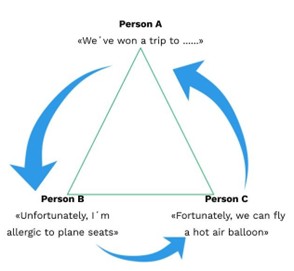
The Fortunately/Unfortunately exercise continues the work on communication and solution-oriented thinking. Participants build a shared story by alternating between obstacles and solutions. Through this structure, they practise imagination, flexibility and the ability to find positive elements even in difficult situations.
The exercise helps participants understand how language shapes emotional and behavioural responses. Starting a sentence with “fortunately” trains the ability to look for possibilities and solutions. In this sense, the tool supports resilience, creativity and constructive participation in group dynamics.
3.9 The impact of an image
The Impact of an Image exercise introduces participants to the connection between images, emotions, thoughts and behaviour. Participants first observe images and identify the emotions they create. Then they work in smaller groups to create their own image intended to communicate a specific emotion.
The purpose is to broaden emotional awareness and show how visual communication can affect others. Participants practise recognising emotions, expressing meaning through images and reflecting on the clarity of their communication. The exercise also connects to collaboration, group roles and the participant’s ability to communicate what they want to their surroundings.
3.10 Logical Levels
Logical Levels is the final tool and belongs to the Impact module. It is used to connect all learning from the programme into a structured action plan. Participants begin with a dream, goal or vision and then explore the qualities, values, identity, activities, surroundings and support that can help them move toward that goal.
This tool helps participants organise information and see the relationship between who they are, what they value and what they need to do. In the JobAut methodology, Logical Levels should not remain aspirational only: it must be connected to the participant’s ICF Capacity Profile and ESCO Job Matches, so that the final action plan is grounded in both personal meaning and documented functional evidence.
The result is a clearer roadmap toward employment, where the participant’s identity, strengths and practical steps are brought together in a coherent and personalised plan.

